Friday, 21 April 2023

BEST EMBEDDED TRAINING INSTITUTE IN CHENNAI


WHY YOU CHOOSE WIZTECH FOR EMBEDDED ?


Experienced Trainers:


our institute has experienced trainers who are experts in the field of embedded systems. we can provide you with in-depth knowledge and hands-on experience in embedded systems programming, hardware design, and system architecture.


Practical Training:


our institute offers practical training that enables you to work on real-world projects. This type of training can give you a competitive edge in the job market and prepare you for the challenges of the industry.


Industry-Relevant Curriculum:


our institute's curriculum is designed to meet the needs of the industry. You will learn the latest tools, technologies, and trends in the field of embedded systems that are in high demand in the industry.


Placement Assistance:


our institute may offer placement assistance to students. This can be a great advantage for those who are new to the field or looking for a career change.


Customized Training:


our institute offers customized training programs to meet the individual needs of each student. This allows students to learn at their own pace and focus on specific areas of interest.


State-of-the-Art Facilities:


our institute has state-of-the-art facilities and equipment that allow students to work with the latest technologies and tools in embedded systems.


Flexibility:


our institute offers flexible training schedules that can accommodate the needs of working professionals or those with other commitments.


Positive Reviews:


our institute has received positive reviews from past students or industry professionals, indicating a high level of satisfaction with the training programs and outcomes.


Strong Alumni Network:


our institute has a strong alumni network that can provide students with valuable connections and career opportunities in the industry.


Collaborative Learning:


our institute encourages collaborative learning and teamwork, which can help students develop important skills such as communication, leadership, and problem-solving.


Industry Partnerships:


our institute has partnerships with leading companies in the industry, providing students with opportunities for internships, projects, and job placements.


Affordable Fees:


our institute offers affordable fees for embedded training, making it accessible to a wide range of students.


Recognition and Accreditation:


our institute may be recognized or accredited by relevant industry bodies, demonstrating the quality and standard of the training programs.


Online Learning:


our institute offers online learning options, providing students with the flexibility to learn from anywhere, anytime.


Focus on Practical Skills:


our institute focuses on building practical skills that are essential for success in the industry, such as problem-solving, critical thinking, and innovation.


Job Placement Record:


our institute has a strong track record of job placements, demonstrating its effectiveness in preparing students for careers in the field of embedded systems.


International Recognition:


our institute is recognized internationally, providing students with opportunities to work or study abroad and expanding their career options.


Professional Development:


our institute offers opportunities for professional development, such as workshops, seminars, and certification programs, enabling students to stay up-to-date with the latest industry trends and technologies.


Focus on Soft Skills:


our institute also emphasizes the development of soft skills such as teamwork, communication, and leadership, which are essential for success in the workplace.


Supportive Environment:


our institute provides a supportive learning environment where students can feel comfortable asking questions, seeking help, and collaborating with peers and instructors.

REVIEWS :

Looking for a reliable and effective embedded training program can be a challenging task, but the positive reviews of our institute's courses can put your mind at ease. Our students have consistently praised the quality of our training programs and the professionalism of our instructors. The following reviews offer valuable insights into the hands-on training, industry-relevant curriculum, and practical skills development that our institute provides. Read on to learn more about our students' experiences and how our training programs have helped them achieve success in the field of embedded systems.


Monday, 10 April 2023

EMBEDDED SYSTEMS - AN OVERVIEW

 Modern technology is not complete without embedded systems. These are specialised computer systems made to carry out particular tasks inside bigger systems. Embedded systems are utilised in a wide range of applications, from handling intricate manufacturing processes to operating basic home appliances.

HOW DO EMBEDDED SYSTEM WORK?

An embedded system is a computer system created to carry out particular functions, frequently under time limitations, as part of a larger system. They are frequently found in small, specialised devices with a single purpose, such smart thermostats, anti-lock brake systems, and medical equipment.

Unlike general-purpose computers, embedded systems are made to efficiently and dependably carry out a specific set of tasks.The computer power required to execute the system's software is often provided by a microcontroller or microprocessor, around which they are typically constructed.

How Crucial are Embedded Systems?

Embedded systems are essential to contemporary technologies. They are employed throughout a variety of sectors, including manufacturing, agriculture, healthcare, and transportation. Following are some explanations on why embedded systems are crucial:

Instantaneous Performance: 

As many embedded systems are made to function in real-time, they have a set amount of time in which to react to inputs and events. This is crucial for applications like aviation, where even a small delay could have disastrous effects.

Small Size: 

When space is at a premium, embedded systems are frequently used in small devices. Embedded systems are capable of carrying out complicated tasks in a compact form factor by utilising specialised hardware and software.

Power Efficiency: 

Since many embedded systems are created to run off batteries, power efficiency is an important factor to take into account. Embedded systems may carry out complicated tasks without requiring a lot of power by using specialised hardware and software.

Reliability:

Embedded systems are frequently utilised in critical applications where failure of the system could have negative effects. They must therefore be built to function dependably for extended periods of time without interruption.

Modern technology is not complete without embedded systems. They offer the processing power required to carry out particular tasks within bigger systems, frequently in real-time and in compact form factors. The need for knowledgeable embedded system engineers is projected to increase as technology develops.

TOP APPLICATIONS OF EMBEDDED SYSTEMS IN DIFFERENT INDUSTRIES

Embedded systems provide the computational power required to carry out specific activities in a number of systems, making them useful in a wide range of industries and applications. Following are a few of the most popular uses of embedded systems in various fields:

Automobile Industry:


 Modern cars use embedded systems for a number of operations, including as managing the entertainment system, operating the engine, and assisting with navigation. They are also utilised in safety systems like airbag deployment mechanisms and anti-lock brakes.

Healthcare Sector:


A range of medical devices, such as pacemakers, insulin pumps, and blood glucose monitors, utilise embedded systems. They offer real-time monitoring and control, making certain that essential medical procedures are carried out precisely and dependably.

Aerospace Industry:


Critical systems including flight control, communication, and life support are controlled by embedded systems in both spacecraft and aircraft. Moreover, they are utilised in launch vehicles and ground stations, both of which provide ground support.

Consumer electronics: 


A variety of consumer electronics products, such as smartphones, tablets, and smart home gadgets, utilise embedded systems. They offer the computer power required to carry out intricate tasks like machine learning and voice recognition.

Manufacturing Sector:


Industrial automation systems use embedded systems to manage machinery and production operations. They can be used to keep an eye on and manage everything from assembly lines to specific machines, ensuring that production procedures go off without a hitch.

Energy Industry: 


Power generating and distribution systems in the energy sector are controlled by embedded systems. They can be utilised to keep track of and manage everything from windmills to power plants, ensuring that energy is generated and distributed in an effective and dependable manner.


Embedded systems provide the computational power required to carry out specific activities in a number of systems, making them useful in a wide range of industries and applications. The need for knowledgeable embedded system engineers in these sectors is projected to increase as technology advances.

ADVANTAGES OF LEARNING EMBEDDED SYSTEMS FOR A CAREER IN TECHNOLOGY

Modern technology relies heavily on embedded systems, which find use across a variety of sectors. Learning embedded systems can help you advance your career in technology in the following ways:

High Demand:

 There is a growing need for professionals who can design and construct customised systems, and there is a high demand for skilled embedded systems engineers. The need for embedded systems engineers is anticipated to increase as technology advances.

Versatility:

 Engineers have the opportunity to work on a variety of projects because embedded systems are employed in a wide range of industries and applications. Because of their adaptability, embedded systems engineers can find employment in a variety of sectors, including the automotive, healthcare, aerospace, consumer electronics, and more.

Real-time Applications: 

A lot of embedded systems are built to react to inputs and events in real-time, which means they must do so quickly. Since this calls for a great degree of precision and accuracy, engineers may find it difficult but satisfying to accomplish.
Engineering sophisticated systems that must function dependably over extended periods of time is a common problem for embedded systems engineers. This makes embedded systems projects tough and gratifying because it calls for ingenuity, problem-solving abilities, and attention to detail.

Competitive Salary: 

Due to the increasing demand for embedded systems engineers, these professionals frequently earn lucrative wages and perks. For people who have the required knowledge and experience, this can make a career in embedded systems a rewarding choice.

Job Security: 

Specialized embedded systems engineers are in high demand across a wide range of businesses, thus job security may be good. Also, as technology advances, a greater need for qualified engineers is anticipated in this industry, ensuring long-term job stability for individuals who possess the requisite qualifications.


Learning about embedded systems might be a fantastic option for people looking to pursue a career in technology. For those with the necessary skills and knowledge, embedded systems provide a number of advantages, including high demand, versatility, challenging projects, outstanding pay, and career security.

TOOLS AND TECHNOLOGIES OF EMBEDDED SYSTEM :

Designing and creating embedded systems calls for specialised tools and technology. To get started with embedded systems, you can utilise the following tools and technologies:

Microcontrollers: 

The majority of embedded systems are built around microcontrollers. These are compact, low-power gadgets that can manage different system operations. Atmel, Microchip, and Texas Instruments are a few well-known microcontroller manufacturers.

Integrated Development Environments (IDEs): 

IDEs are software tools that give embedded systems developers access to a full programming environment. Developers may write and test code in a single environment with the help of these tools, which include code editors, debuggers, and compilers. For embedded systems, several well-liked IDEs are Keil, MPLAB, and Eclipse.

Operating Systems for Embedded Systems:

 Operating systems for embedded systems are created especially for usage in embedded systems. They offer the software architecture required to control hardware resources and run applications. FreeRTOS, Embedded Linux, and ThreadX are a few well-liked embedded operating systems.

Sensors: 

Sensors are crucial parts of many embedded systems since they give the system input and enable it to react to its surroundings. Temperature, motion, and pressure sensors are a few common sensors utilised in embedded systems.

Through the usage of communications protocols, many embedded system components can communicate with one another. I2C, SPI, and UART are a few common communication protocols used in embedded systems.

Programming Languages:

 C, C++, and assembly language are just a few of the programming languages used in embedded systems. The most popular language for programming embedded systems is C because it is effective and offers low-level access to system resources.

Designing and creating embedded systems calls for specialised tools and technology. The majority of embedded systems require microcontrollers, integrated development environments (IDEs), embedded operating systems, sensors, communications protocols, and programming languages. These tools and technologies will be essential as you start your journey into embedded systems since they will aid in the design and development of reliable and practical systems.


Thursday, 6 April 2023

WHAT IS MATLAB ? USES OF MATLAB ? MATLAB IN FUTURE


MATLAB is a powerful numerical computing programme that has gained popularity among engineers, scientists, and researchers all around the world. MATLAB is a flexible platform that can be used for a variety of applications, from signal processing and image analysis to data analysis and machine learning. Its user-friendly interface, large function library, and advanced visualisation capabilities make it a platform that is well suited for these kinds of tasks. In this article, we'll look at some of MATLAB's main advantages and capabilities as well as some of the software's most typical applications.

1. Easy-to-use Interface:

      MATLAB offers a user-friendly interface that makes it easy for users to complete challenging mathematical computations and data analysis tasks without the need for advanced programming knowledge. For the majority of its tasks, the software offers a graphical user interface (GUI), allowing users to interact with their data in real-time.

2. Large Function Library:

      MATLAB includes a large library of pre-built functions that span a variety of applications in mathematics, science, and engineering. These routines can be easily changed or expanded using the built-in programming language and are optimised for speed and accuracy.

3. Extensive Visualization Capabilities: 

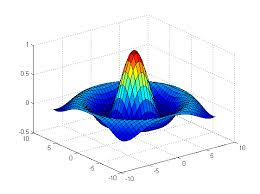
     MATLAB provides a variety of visualisation tools that make it simple for users to produce graphs, charts, and animations of a professional calibre. These tools include functions for charting in 2D and 3D, tools for processing and analysing images, and tools for creating animations and videos.

4. High Performance: 

     MATLAB is made to deliver high-performance computation by utilising contemporary hardware, such as multi-core processors and GPUs. Users may now do intricate calculations and simulations in a fraction of the time it would take them to do so using other tools.

5. Machine Learning and Deep Learning:

     In addition, MATLAB provides a set of tools for machine learning and deep learning that let users create and train sophisticated models for a variety of uses, including speech and picture recognition, predictive analytics, and natural language processing.

The following are some of the most typical MATLAB usage cases:

Signal processing: 


MATLAB is frequently used for signal processing tasks including speech recognition, radar and sonar signal analysis, and audio and image processing.

Control systems: 


Control systems analysis and design, including system modelling, simulation, and optimisation, are frequently done in MATLAB.

Data analysis:


 MATLAB is a potent tool for statistical analysis, data mining, and machine learning. It is also useful for data visualisation.

Computational finance :


Financial modelling, risk management, and portfolio optimisation are all common uses of MATLAB in the finance sector.

Robotics :


Robot kinematics and dynamics, path planning, and control are all common robotics applications that benefit from the use of MATLAB.

MATLAB is a strong and adaptable programme that provides engineers, scientists, and researchers with a wide range of features and advantages. Its user-friendly interface, large function library, cutting-edge visualisation capabilities, and high performance make it the perfect platform for a variety of applications, from robotics and machine learning to signal processing and data analysis. There are many online resources accessible if you're interested in learning more about MATLAB, including tutorials, documentation, and forums where you can interact with other users and subject-matter experts.

FUTURE OF MATLAB 


Engineers, scientists, and researchers have long favoured MATLAB as a tool, and it is now a standard in many industries thanks to its usability and versatility. In the coming years, cutting-edge industries like artificial intelligence (AI), the Internet of Things (IoT), and quantum computing will all benefit greatly from the use of MATLAB. We will look at some of the ways that MATLAB is anticipated to change and adapt to suit the demands of these new technologies in this blog article.

Artificial Intelligence:


 The development of MATLAB in the field of artificial intelligence is one of the most fascinating areas of advancement (AI). Although MATLAB's built-in machine learning and deep learning tools are already widely used for image recognition, speech recognition, and other applications, we can anticipate seeing even more sophisticated AI capabilities integrated into MATLAB as AI becomes more significant in fields like autonomous vehicles, robotics, and natural language processing.

Internet of Things:


 MATLAB is anticipated to take on a more significant role in the Internet of Things (IoT). Powerful data analysis and visualisation tools that may assist users in making sense of the enormous amounts of data generated by these devices are becoming more and more necessary as more and more devices are connected to the internet. MATLAB's vast function library and cutting-edge visualisation skills make it a good choice for this job.

Quantum computing :


Quantum computing is a young field that has a lot of potential for resolving complicated issues that are currently beyond the reach of conventional computers. Since MATLAB is now used to model quantum systems and algorithms, we may anticipate that as quantum computing technology develops, MATLAB will adapt and incorporate new features to serve this developing sector.

Cloud Computing :


Last but not least, the trend of cloud computing is quickly changing how we use software and data. We may anticipate that MATLAB will develop in order to take use of these new capabilities as more businesses shift their operations to the cloud. For instance, MATLAB Online, a cloud-based version of the software, is already accessible and enables users to access MATLAB from any device with an internet connection.

In conclusion, MATLAB is a flexible and effective instrument that is ready to take on a greater significance in the field of engineering, science, and research. We can anticipate seeing MATLAB adapt and integrate new capabilities to meet these trends as emerging technologies like artificial intelligence, the Internet of Things, quantum computing, and cloud computing continue to develop. There are various online resources, like as tutorials, forums, and professional organisations, that are available if you're interested in finding out more about MATLAB and its future possibilities. These resources may help you keep up with the most recent advancements.

Tuesday, 4 April 2023

ARTIFICIAL INTELLIGENCE | ABOUT AI | AI IN BUSINESS | FUTURE OF AI


The ability of machines to carry out tasks that ordinarily require human intelligence, such as reasoning, learning, and problem-solving, is known as artificial intelligence (AI). The foundation of artificial intelligence (AI) is the notion that machines may be made to think, learn, and adapt like people, and that they can utilise this knowledge to make wise decisions and resolve challenging issues. 

Rule-based systems, decision trees, neural networks, and deep learning are a few of the several types of AI. Each type of AI has distinct advantages and disadvantages and can be applied to address various issues. The most basic form of AI, rule-based systems operate by adhering to a set of established rules. A rule-based system may, for instance, be used to identify a medical condition from a list of symptoms.

A more sophisticated form of AI, decision trees branch out from a set of initial circumstances. A decision tree, for instance, might be used to choose the optimal course of action from a set of input variables.

Artificial intelligence (AI) that is modelled after the structure of the human brain uses neural networks. They operate by processing data through layers of connected nodes, each of which has a particular job to do. When it comes to identifying patterns and making predictions based on data, neural networks excel.

A particular kind of neural network called deep learning employs many layers of connected nodes to learn from and adjust to new data. Deep learning is especially effective at jobs like speech and image recognition.

No of the kind of AI, all AI systems need data to learn and get better over time. Many sources, such as sensors, cameras, and user input, can provide this data.

AI has the ability to completely change how we interact, work, and interact with one another. AI has already impacted our daily lives in a variety of ways, from self-driving cars and virtual assistants to tailored recommendations and fraud detection, and its influence is only predicted to increase in the coming year

How Machine Learning is Revolutionizing Industries with AI in Business


For some time now, artificial intelligence (AI) has been a popular term, and for good reason. Businesses across industries are utilising AI to promote innovation, streamline processes, and improve performance with the use of machine learning algorithms.

What precisely is machine learning then? Machine learning, as a subset of artificial intelligence, allows computers to learn from data and modify their behaviour without being explicitly programmed. This indicates that machines have the ability to continuously enhance their performance over time, becoming more precise and effective at doing particular jobs.

The corporate world is one area where machine learning is having a significant impact. Machine learning algorithms are being used by businesses to evaluate massive volumes of data and obtain insights into consumer behaviour, market trends, and other topics. As a result, companies are able to make data-driven decisions and improve their processes for optimum effectiveness and profit.

Here are a few examples of how machine learning is transforming several industries:

Healthcare: 

    To assist clinicians in making diagnoses and creating individualised treatment regimens, machine learning algorithms can examine patient data and medical pictures. This is especially helpful in sectors like radiology, where it can take a lot of time and effort to analyse medical images.

Finance: 

    To identify fraudulent transactions, determine credit risk, and make investment decisions, machine learning algorithms are used. Financial organisations can reduce risk and increase their profit line by doing this.

Manufacturing: 

     Robots driven by machine learning are being utilised to carry out repetitive activities more quickly and accurately, hence lowering errors and the need for human labour.

Retail: 

     Machine learning algorithms are being used to evaluate client data and provide individualised recommendations, enhancing customer satisfaction and boosting sales.

Of course, there are risks and moral questions that come with any new technology. The possible effects of machine learning on employment, privacy, and security have raised some worries. Businesses should use prudence while developing and implementing AI, giving transparency, accountability, and ethical considerations first priority.

The advantages of AI for business, though, are evident. Business operations may be optimised, innovation can be stimulated, and firms can stay one step ahead of the competition by utilising machine learning algorithms to analyse data and acquire insights.

FUTURE OF AI 


Artificial intelligence (AI) has been developing quickly in recent years and is anticipated to become progressively more prevalent in our lives. The following are some significant advancements in AI that we can anticipate:

Increasing automation:

      In the upcoming years, AI-powered automation is predicted to spread even further. More tasks will be automated as a result, which will benefit a number of different businesses, including manufacturing, healthcare, transportation, and finance.

Natural language processing improvements:

     AI is predicted to get better at comprehending and responding to human language. This will improve the usability and effectiveness of conversational interfaces and virtual assistants.

Advanced Robotics:

     AI-powered robots are already in use in the manufacturing, healthcare, and other sectors of the economy. Unfortunately, the capabilities of these robots are often constrained, necessitating human supervision. We can look forward to more sophisticated robots in the future that are capable of carrying out difficult activities on their own, like operating on patients or operating vehicles.

More individualised and context-sensitive AI:

     In industries like entertainment and e-commerce, AI is already being utilised to deliver individualised recommendations and experiences. Yet, these suggestions frequently depend on basic algorithms that don't include all of a user's preferences and behaviour. We may expect AI to become more sophisticated and context-aware in the future, offering suggestions and experiences that are truly customised to each user.

More Advanced Machine Learning: 

     A branch of artificial intelligence, machine learning is concerned with giving computers the ability to learn from data and enhance their performance over time. Machine learning has recently made strides in areas like computer vision and natural language processing. We may expect ever more sophisticated machine learning algorithms in the future, which will be able to learn from less data, generalise to new situations better, and produce predictions that are more accurate.

More Transparent and Ethical AI:

    As AI grows more prevalent and potent, there is growing worry about the moral ramifications of its application. We should expect a greater focus on creating ethical, transparent, and transparent AI in the future. This could entail creating algorithms that are less prejudiced and more open about the decisions they make, as well as creating moral frameworks for the application of AI in delicate fields like law enforcement and healthcare.


In conclusion, there are a lot of exciting developments in AI that we can look forward to in the future, from better machine learning and robots to better natural language processing. Yet it's crucial to take into account the ethical implications of these developments and make sure that AI is created and applied in a responsible and open manner.

what is HMI ? about HMI

 HMI stands for human machine interface and is used in industrial settings. HMI systems can be considered a "window" into a process. This window could be present on specialised equipment like operator panels or a computer. To enable information exchange between the user and the system, an HMI system has connections to both the hardware and software components of an industry.

The collection of screens,visual displays,and other technologies utilised by the operator to view and communicate with the control system is knowm as the human-machine interface(HMI).

The HMI receives signals from the process through devices with input/output cards in the computer,such as PLC 35s,RTU 28s(remote units),or drives.All of these devices must have a communication protocol that the HMI can comprehend


HMI software's characteristics include:

MONITORING : 

     Monitoring is the process of getting instantaneous plant data and displaying it. To make a reading easier to understand, this data can be presented as numbers, text, or images.

SUPERVISION : 

      In addition to monitoring, this capability also enables the possibility of changing the process's operating conditions from the computer.

ALARM: 

      The capacity to identify and communicate extraordinary events occurring during a process.

CONTROL :

      Control is the capacity to use algorithms that modify the process's values and keep them inside predetermined bounds.

HISTORIAN :

    The capacity to show, store, and process data on a regular basis is known as historian. This data storage is a potent instrument for process improvement and correction.

DISPLAY HIERARCHY :

      Displays ought to be created in a manner that exposes detail in stages. Displays created from a stack of P&ID schematic designs won't have this; instead, they will be "flat," similar to a hard drive on a computer, with a single folder containing all of the data.


There is a display hierarchy of four levels:


Level 1 -

Operational overview: Often, control interactions cannot be made with overview visuals. It serves as a general gauge of how the business is doing. By monitoring the Key Performance Indicators, it provides a clear indicator of the operation's present performance.

Level 2-

 Unit Control: A process is composed of various little units, each of which has its own process system. Every individual main unit operation has a Level 2 graphic. It is intended to include all the data and controls required to let the operator to carry out nearly all tasks related to that segment from a single graphics.

Level 3-

All of the information on a single piece of equipment is presented in Level 3 visuals. They are employed for thorough problem diagnosis. They display information about each instrument, the interlock's status, and other things. For a Level 3 display, a schematic or P&ID kind of representation is frequently preferred.

 Level 4-

The most information about a subsystem, a specific sensor, or a component is provided by Level 4 displays. They display the most thorough data on the system and its subsystems.


varieties of HMI

Built to measure: They are created in graphical programming environments like Visual C++, Visual Basic, Delphi, etc.


 HMI canned goods: The majority of the common SCADA system functions are covered by these software packages.


visit us : http://www.processautomationtraining.in


Monday, 3 April 2023

WHAT IS VFD ? ABOUT VFD

      You'll discover more about VFD today. Namely, what a VFD is and when automation and PLCs should use one.
What precisely is a VFD, then? That stands for variable frequency drive, after all.


They are used to run AC motors at various speeds or to allow them to gradually increase their speed for a smooth starter.
Other individuals just refer to them as drives.


VFDs work by changing the motor's frequency to change the rpms.


A VFD actually converts the voltage twice to do this:
1) It transforms our three-phase AC power to DC first. Diodes are used to do this.
2) After that, a capacitor is used to purify the DC.
3) It will then change the DC into AC. Transistors serve as switches to do this.


The VFD is able to change the frequency it feeds to the motor by using these "switches." This in turn manages the motor's speed.
I realise that there is a lot of material here to process. Let's contrast the VFD's internal operations with a straightforward piping setup.


Let's start by taking a look at the diodes that convert AC to DC.

 It functions similarly to a check valve in a water system.
A check valve restricts the flow of water to one direction, much like an electrical diode.


As a water filter, the capacitor keeps everything clear and usable.
Transistors function as valves. When necessary, they switch the flow on and off. As a result, the motor's frequency can be modified by the VFD.


Let's look at some applications for VFDs now that we know how they function.


Controlling the speed of a water pump at a water treatment facility is one fairly typical function in industry.


The water entering a water treatment facility normally comes in at a continuous flow. The operator will need to slow down the delivery if the water demand leaving the facility is lower than the supply coming in. The AC motor is fitted with a VFD to do this.
The operator may keep an eye on the water flow and manually change the VFD as necessary.


The ability to be controlled by a PLC is another fantastic feature of VFDs. PLCs can monitor and manage motor speeds utilising the VFD using simple communication protocols that have been covered in earlier videos, like RS232 and RS485.


This contributes to the efficiency and ease of a procedure like water treatment. Every case where automation would be advantageous can use this system.


Let's consider what we now know in the past. A variable frequency drive is known as a VFD. They are employed to regulate an AC motor's speed. In order to avoid a high load from straining a motor at startup or to ramp up a motor for a smooth start, they are also used. By changing the frequency sent to the motor, this is achieved. A DC to AC converter is set up after an AC to DC converter. The usage of variable frequency drives is widespread in industry. To control the amount of water entering a water treatment facility is a typical example. Using VFDs, the pump's flow can be managed manually or automatically using a PLC.


I hope this blog post has given you a better understanding of VFDs. They can actually improve the efficiency of any industrial or automated operation.


Saturday, 1 April 2023

WHAT IS DCS ? ABOUT DCS

 A PLC fundamentally functions as an industrial computer that manages one or more production processes. It can be used for a variety of routine duties related to controlling industrial production processes, including regulating the rate of airflow in an HVAC system, maintaining liquid levels throughout a network of tanks, and many other similar duties. Coordination of the control of an entire plant was historically the one task that the PLC was unable to perform. It was the initial purpose for which the DCS was created. The DCS does not, in fact, govern a single process. Instead, it manages and oversees each of the numerous controllers installed across a plant.As manufacturers look for ways to extract more efficiency out of their current production assets, the essential ability of a DCS to orchestrate plant-wide operations has grown in significance.

It is worthwhile to reflect on a DCS's purpose, application, and signi


ABOUT DCS :

The DCS, as its name suggests, is a network of sensors, controls, and related computers that is installed everywhere throughout a facility. Each of these components has a specific function, such as data collection, process management, data storage, and graphical display. Through the local area network of the plant, also known as the control network, these separate components talk to a central computer. The DCS, which serves as the "central brain" of the plant, automates decisions based on production trends as they are observed in real-time throughout the facility.In order to meet the fluctuating demand for electricity during hot summer days, for instance, the DCS at a power plant might automatically increase the steam output capacity of many turbines, and then decrease it as external temperatures fall overnight and demand declines. The DCS can modify each of the several interconnected unit activities in a plant, as opposed to the PLC, which could only modify a single unit operation.


DCS USE FOR : 

In order to meet the fluctuating demand for electricity during hot summer days, for instance, the DCS at a power plant might automatically increase the steam output capacity of many turbines, and then decrease it as external temperatures fall overnight and demand declines. The DCS can modify each of the several interconnected unit activities in a plant, as opposed to the PLC, which could only modify a single unit operation.

WHY DCS IS IMPORTANT :

The significance of the DCS can be better understood by contrasting two plants. Consider first a modest municipal waste water treatment plant with a dozen control loops. The engineering team at the facility can easily maintain a close eye on the operation of such a small number of controllers. Next, visualise a sizable refinery that runs 10,000 intricately dynamic control loops. While orchestrating control at the refinery without a DCS can be challenging, controlling control at the treatment facility is rather simple. The distinction between DCS and PLC has become more hazy over time.Despite the fact that the DCS has historically been the only method for establishing safe and effective plant-wide control, improvements in processing power have made it possible for the PLC to quickly assume more responsibilities. The PLC and DCS are projected to become increasingly interchangeable in the years to come.

BEST AVR MICROCONTROLLER TRAINING IN CHENNAI - EMBEDDED SYSTEM TRAINING INSTITUTE IN CHENNAI

  Introduction In the ever-evolving field of electronics and embedded systems, AVR microcontrollers stand as epitomes of cutting-edge techno...